







Streeting's £12bn 'wealth tax that works' is really a CGT fix
The former Health Secretary's leadership pitch revives a reform economists have urged for years. The maths, and the entrepreneur carve-out, are shakier than the headline.

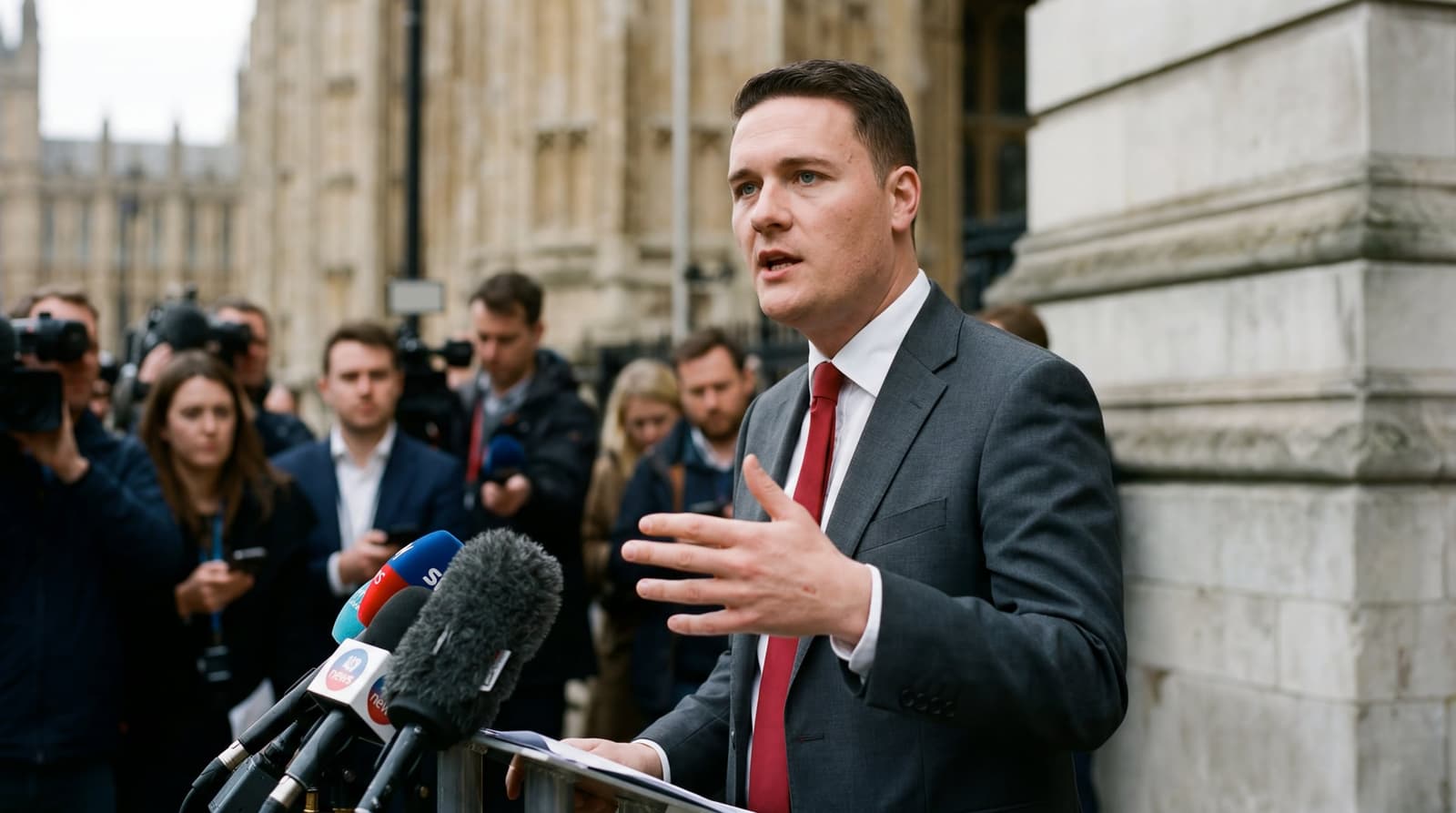
Wes Streeting used the opening move of his unofficial Labour leadership campaign to pledge a "wealth tax that works," proposing to align capital gains tax with income tax at 20%, 40% and 45%, with a person's band set by combining their income and asset profits. The former Health Secretary, who resigned from Cabinet on 14 May citing a loss of confidence in Sir Keir Starmer, told the BBC's Political Thinking podcast on 21 May the package would raise around £12bn a year and close loopholes used to dress up earned income as capital gains.
The plan, outlined to the BBC, is not strictly a wealth tax. It is a rate alignment, a reform the Institute for Fiscal Studies, the Resolution Foundation, the IPPR and Tax Policy Associates have all urged in published work since 2023. Higher and additional-rate taxpayers currently pay 24% on most gains. The annual tax-free allowance has been cut from £12,300 in 2022-23 to £3,000 today.
Streeting framed the pitch in moral, not technical, terms.
A member of my family is a cleaner in Lancashire. She pays a higher tax rate on her salary than her landlord pays for the growing value of the home she lives in. She slogs her guts out, he puts in far less effort, yet the state rewards him more than her. And we wonder why people are angry.
A reform economists have been demanding for years
The headline idea is not new. Dan Neidle of Tax Policy Associates, whose 2024 paper modelled almost exactly the alignment Streeting now proposes, called it a "good proposal" and said he was "stunned, appalled, shocked etc. to see actual tax reform from a politician."
Helen Miller, director of the IFS, welcomed the direction of travel but flagged the one design choice Streeting has loudly trailed: a lower rate for "genuine" entrepreneurs to preserve incentives for risk-taking.
We should be wary of any proposals to 'reward genuine entrepreneurship, with lower CGT rates'. That approach has been tried and has failed because it's not possible to identify in advance who 'genuine entrepreneurs' are.
Helen Miller, Institute for Fiscal Studies
That is the unresolved fault line in Streeting's plan. The previous entrepreneurs' relief, rebranded as Business Asset Disposal Relief, has been repeatedly criticised by the IFS as expensive and poorly targeted, with most of the benefit flowing to people who would have started or sold businesses anyway. Streeting has not yet specified how his version would avoid the same fate.
The £12bn question
CGT currently raises about £15bn a year, less than 2% of total tax revenue, according to the IFS. It is paid by roughly 350,000 people, around 0.65% of UK adults, and two-thirds of the revenue comes from just 12,000 people with average annual gains of £4m.
That concentration cuts both ways. It means the base is highly responsive to behavioural change. HMRC's own ready reckoner suggests a 10 percentage-point rise in the higher CGT rate could actually lose around £2bn a year by 2027-28, as wealthy taxpayers defer disposals, restructure into companies, or emigrate. A 2024 Centre for the Analysis of Taxation paper estimated that a reform package like Streeting's could raise £14bn, but only if combined with base changes such as taxing gains at death or removing the corporate-asset uplift.
Streeting's £12bn figure sits between those estimates. He has not yet published the modelling behind it, and his team has not said which base reforms he would pair with the rate rise. Without those changes, the headline number looks optimistic.
Adam Jefferies of PKF Littlejohn was blunter on the framing.
This is not a wealth tax; it is an increase in the capital gains tax rate on non-business assets.
Adam Jefferies, PKF Littlejohn
The political backdrop
The policy roll-out is inseparable from the Labour leadership question. More than 80 Labour MPs have publicly called on Starmer to set a departure timetable after heavy local election losses in early May. Streeting became the first Cabinet minister to walk. Greater Manchester Mayor Andy Burnham, the other obvious contender, is not in Parliament; the NEC blocked an earlier attempt to clear his path in January, and he has yet to secure a winnable by-election seat.
Streeting acknowledged the choreography on the BBC.
It was clear that if we'd been plunged straight into a leadership contest by me or for that matter anyone else, I think it would have been seen as a deliberate attempt to get ahead of Andy Burnham's potential return.
The CGT pitch lets Streeting plant a flag on the Labour right's weakest flank, fairness, while keeping a pro-growth posture through the entrepreneur carve-out. It also implicitly challenges Chancellor Rachel Reeves, who nudged the main CGT rate to 24% in her first Budget but stopped short of alignment.
Downing Street pushes back
The government's response was to dispute the premise. Chief Secretary to the Treasury Lucy Rigby told BBC Radio 4's Today programme: "We already tax wealth in this country." Communities Secretary Steve Reed pointed to the non-dom regime overhaul, telling reporters it had raised "around £8 billion."
Neither minister engaged with Streeting's specific mechanism, the alignment of CGT bands with income tax, or with the loophole-closing measures aimed at personal service companies and share-based pay. That silence is itself revealing. The technical consensus among independent tax economists has moved decisively towards CGT reform; the Treasury's political resistance has not.
Whether Streeting's version is the right one is a separate question. The £12bn estimate needs published workings. The entrepreneur exemption needs a definition that has eluded every previous attempt. And calling rate alignment a "wealth tax" is, as Jefferies noted, a stretch. What Streeting has done is force a debate the Treasury has spent a year avoiding, and stake out the policy ground on which a leadership contest, when it comes, is likely to be fought.
Related stories
Six eggs used to cost £1. Here's why they're now £2.
UK egg prices have doubled in four years despite record production. The real story isn't greedflation, it's how prices move down much slower than they move up.
In Cambridge, a paycheck no longer keeps workers out of the food bank
The UK's most unequal city is now feeding employed residents through subsidised food clubs, raising questions about whether wages or housing will ever catch up.
UK spends £25 on youth benefits for every £1 on jobs help, Milburn finds
The former Labour health secretary's interim NEET review lands on a government still bruised by last summer's welfare rebellion, and questions whether spending more on job schemes can fix a crisis now driven by mental…

Why your ice cream costs $6.49: a coconut, cocoa and corporate crisis
A record-hot summer pushed American ice cream prices to all-time highs. The deeper story runs through Philippine biodiesel mandates, West African droughts, and the breakup of the world's biggest ice cream company.
Keep Reading
Juliann Bluitt Foster, Trailblazer in Dentistry, Is Dead at 80

Northern Ireland's rarest rainforest gets a 100-year reboot in Tyrone

Four Jersey beaches flunk bacteria tests as island bakes in record May heat

Bionic arms for five-year-olds, a third thumb, and the 90% who get nothing

Frasers rebrands Castleford outlet 'Leeds'. The real story is a credit product.