




Bionic arms for five-year-olds, a third thumb, and the 90% who get nothing
A BBC Tech Life episode showcases the bleeding edge of prosthetics. The harder story is who can actually use any of it.

A five-year-old in Long Island flexes the muscles in his upper arm and a 3D-printed bionic hand opens. A volunteer in a London lab grows so used to a robotic third thumb that her brain starts treating it like part of her body. At MIT, a surgically integrated bionic knee lets users climb stairs and step over obstacles more naturally than any socket-mounted leg before it.
And according to the World Health Organization, roughly nine out of ten people who need a prosthetic limb still cannot get one.
That gap sits underneath the BBC World Service's Tech Life episode "Bionic Arms and Robotic Thumbs," presented by Shiona McCallum with technology reporter Paul Carter, himself a prosthetics user. The segment, available on BBC iPlayer and Apple Podcasts, tours three frontiers of the field: paediatric bionic arms, tissue-integrated robotic legs, and motor-augmentation devices that add capability rather than replace it. Each is genuinely impressive. None is widely available.
A five-year-old, an Iron Man arm, and an exception to the rules
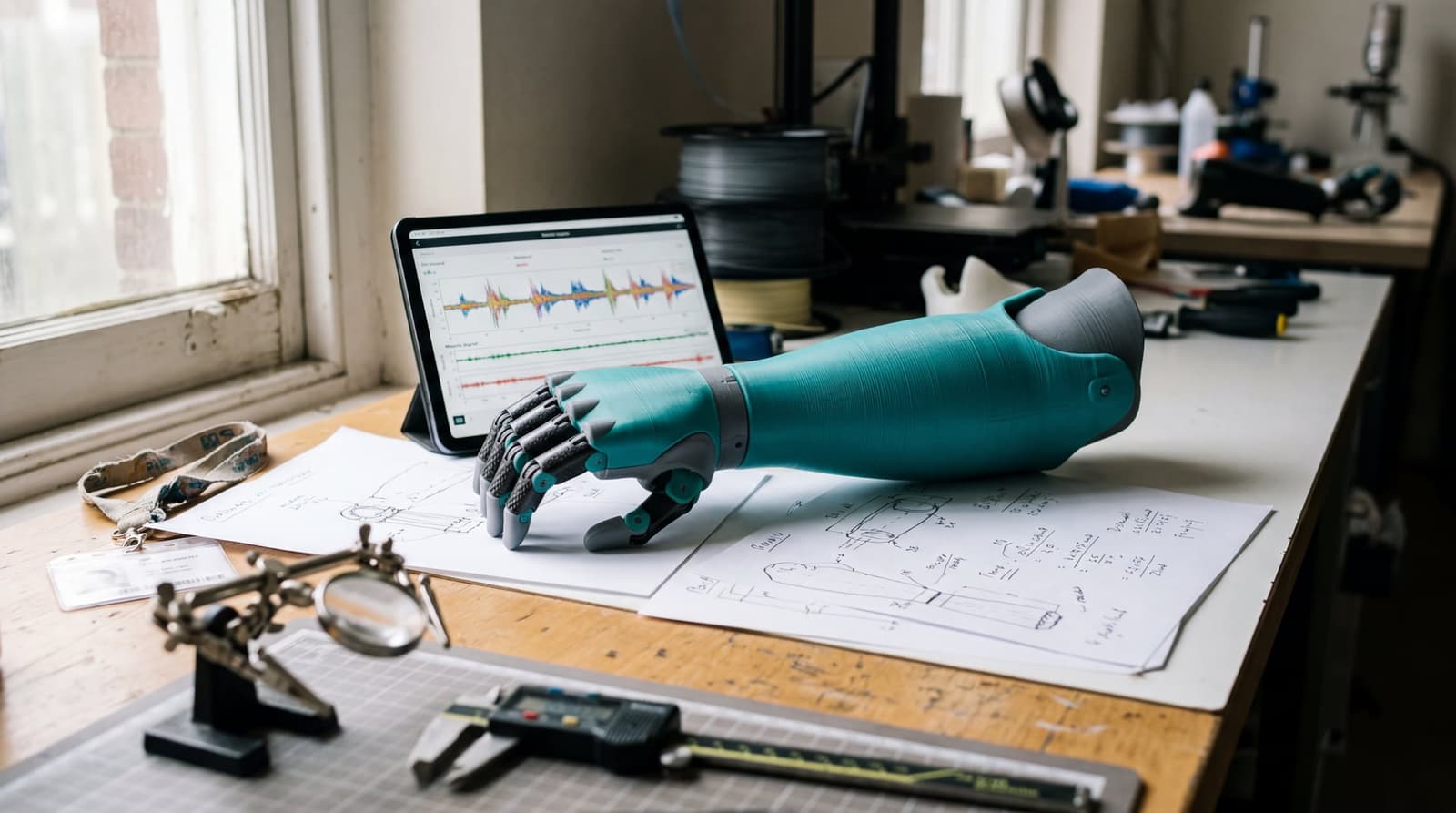
Jordan Marotta, from Long Island, is believed to be the youngest person in the world fitted with a multi-articulating bionic arm. Bristol-based Open Bionics confirmed in a May 2024 statement that Jordan received its 3D-printed myoelectric Hero Arm at age five, two years below the company's usual minimum. The device reads muscle contractions in the residual limb and translates them into hand movements.
His mother, Ashley Marotta, told ITV News that the fitting nearly didn't happen.
Jordan is the youngest in the world and initially we were told he was too young and we convinced Open Bionics to see us and luckily he picked it up right away.
Ashley Marotta, Jordan's mother
Open Bionics is the only manufacturer making multi-articulating hands small enough for children that age. The Hero Arm is custom-printed, which keeps the unit cost lower than traditional myoelectric prostheses, but it still sits well outside what most national health systems will fund as a first-line paediatric device. In the UK, NHS provision typically defaults to simpler mechanical hands; families often crowdfund the upgrade.
MIT's bionic knee, and a five-year wait
The most clinically significant news in the field arrived after the BBC episode aired. In July 2025, MIT researchers published in Science a study of an osseointegrated mechanoneural prosthesis, or OMP, that anchors directly into the femur and connects to surgically preserved muscle pairs in the residual limb. Users outperformed traditional socket-prosthesis wearers on stair-climbing, obstacle navigation and perceived embodiment.
The surgical half of the system, the agonist-antagonist myoneural interface (AMI), is already routine for below-the-knee amputations at Brigham and Women's Hospital. The full OMP system, including the robotic knee itself, is roughly five years from FDA clearance, MIT News reported.
Prof. Hugh Herr, co-director, MIT K. Lisa Yang Center for Bionics
Prof. Hugh Herr, who leads the MIT lab and is himself a double below-knee amputee, joined McCallum on the BBC to discuss a parallel project at the K. Lisa Yang Center: bringing prosthetic care to survivors of forced amputations during the Sierra Leone Civil War. That program, run with Sierra Leone's Ministry of Health, uses mobile 3D printing and trains local prosthetists, an approach Herr described in a UCL lecture in October 2024 as a 40-year investment in a country's health infrastructure.
The third thumb question
The episode's other thread is stranger and more philosophical. Designer Dani Clode, now at the UCL/Cambridge Plasticity Lab, has spent several years developing the Third Thumb, a 3D-printed extra digit worn opposite the biological thumb and controlled by pressure sensors under the wearer's toes. Volunteers learn to use it within minutes.
In research published with UCL neuroscientist Prof. Tamar Makin, the team found that after a week of training, the brain's representation of the wearer's hand had measurably shifted.
"Body augmentation is a growing field aimed at extending our physical abilities, yet we lack a clear understanding of how our brains can adapt to it," Makin said in the UCL announcement. Clode added that participants could control the device "without overthinking," a finding the team later extended to a more diverse general-public sample in 2024.
It's a genuinely novel category: not replacing lost function, but adding new function to a typical body. The ethics, regulation and access questions are wide open.
The chasm the headlines skip
Pull back from any single device and the field looks less like a march of progress and more like a widening gulf.
- Globally, roughly 65 million people live with amputations, with about 1.5 million new cases each year, according to figures compiled by iSBRAVE.
- The WHO estimates only 1 in 10 people who need assistive devices including prosthetics can access them; in low-income countries, up to 95% of amputees go without prosthetic care.
- A prosthetic leg in the developed world costs between $5,000 and $50,000, per MIT Solve, before any AI-driven or osseointegrated upgrade.
- The need is projected to roughly double by 2050, driven by ageing populations and rising rates of diabetes-related amputation.
Even within wealthy systems, the lived experience tracks the same pattern. Carter, the BBC reporter and prosthetics user co-presenting the episode, is one of the few mainstream tech journalists routinely framing this beat from inside it. The devices written up in glossy launch coverage are rarely the devices most amputees on the NHS, Medicare or comparable systems will be offered. Smart prosthetics that connect to a smartphone for grip-strength tuning, now a standard feature with several manufacturers, remain a premium tier.
Herr's argument, made repeatedly in his MIT and UCL talks, is that the answer is not to slow innovation but to build the delivery system alongside it: train local clinicians, drive down unit costs with 3D printing, and treat prosthetics provision as health infrastructure rather than a boutique product line.
The BBC episode lands the wonder beats well. The harder beat, the one most of the field's coverage skips, is whether the next decade closes the gap between Jordan Marotta's Hero Arm and the 95% of amputees in low-income countries who currently have nothing at all.
Related stories
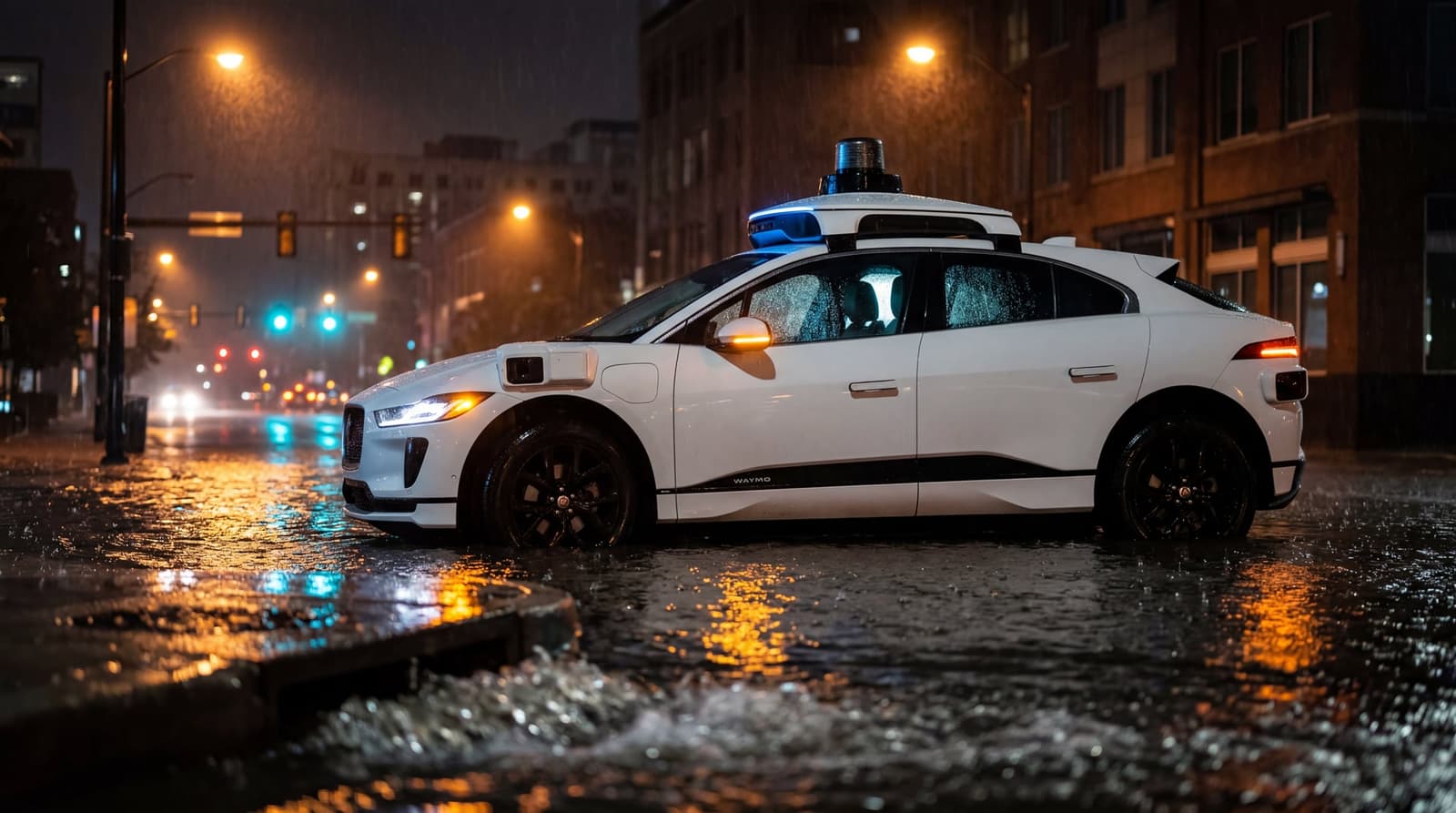
Waymo Halts Robotaxis in 5 Cities as Flood Patch Fails in Atlanta
A software stopgap pushed to all 3,791 Waymo vehicles depended on National Weather Service alerts that arrived too late. The same day, Waymo also pulled every freeway route in the US.

Atlanta Residents Cheer AI Productivity, Fear the Job Cuts It Brings
A new Atlanta Regional Commission snapshot finds 61% of metro residents expect AI to boost productivity, but 73% expect it to shrink the job pool, just as city hall reviews live AI deployments.

Newsom's AI Workforce Order Buys Time as Layoffs Mount
California's governor ordered agencies to study AI's disruption to workers. Labor leaders say studying isn't action, and a tougher bill already sits on his desk.

SpaceX scrubs Starship V3 debut a day after filing $1.75T IPO
A hydraulic pin halted Flight 12 at T-40 seconds. The S-1 filed hours earlier names Starship as the prospectus's top risk.
Keep Reading

Northern Ireland's rarest rainforest gets a 100-year reboot in Tyrone

Four Jersey beaches flunk bacteria tests as island bakes in record May heat

Six eggs used to cost £1. Here's why they're now £2.

In Cambridge, a paycheck no longer keeps workers out of the food bank