




Six eggs used to cost £1. Here's why they're now £2.
UK egg prices have doubled in four years despite record production. The real story isn't greedflation, it's how prices move down much slower than they move up.

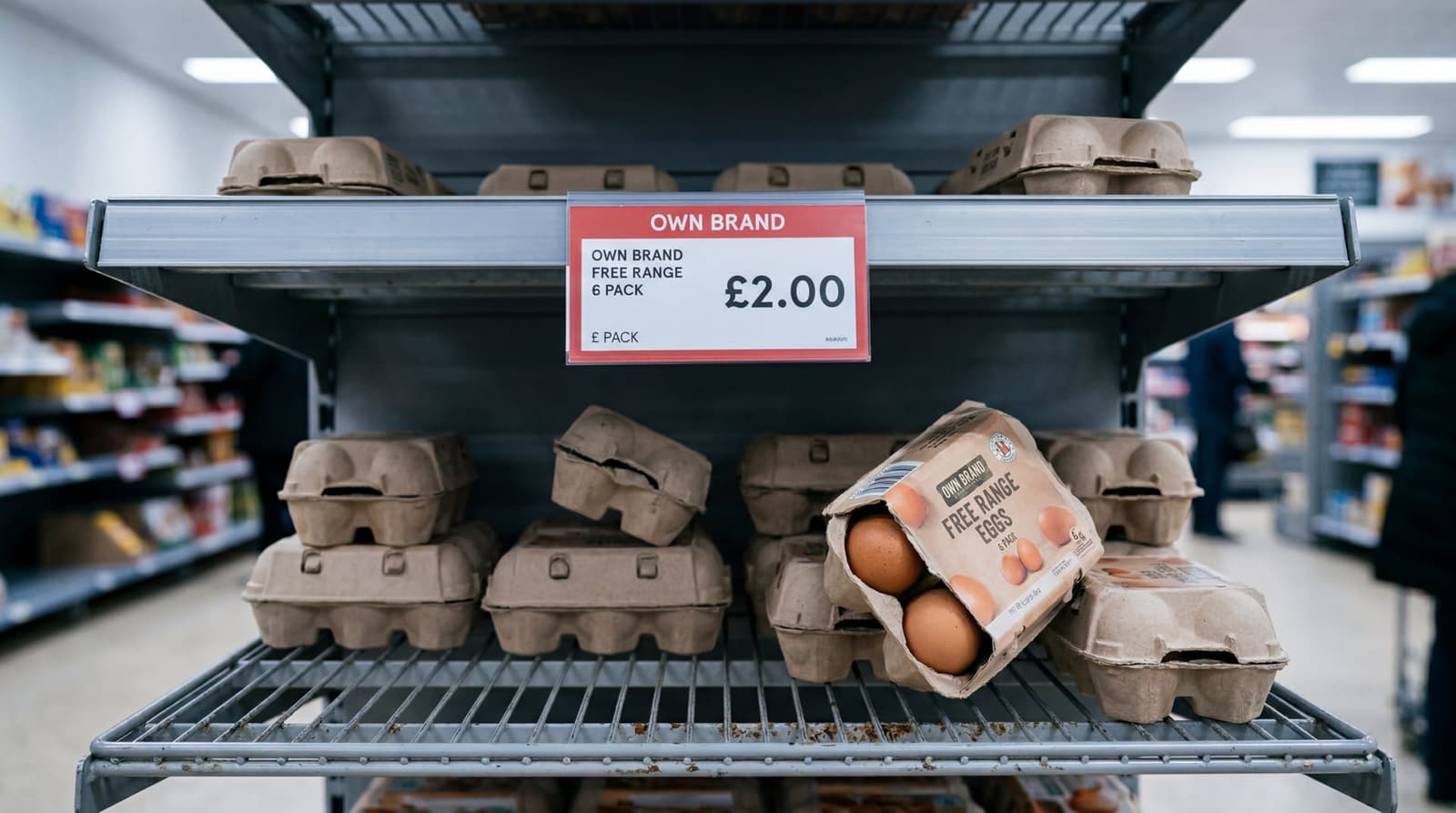
A six-pack of supermarket own-brand eggs that cost £1 in 2022 now starts at £2 at Tesco, Morrisons and Asda, a price threshold British shoppers have never crossed before. The cheapest equivalent at a discounter, Morrisons' medium free-range, has climbed from 75p in February 2020 to £1.75 this month, a 120% jump in five years, according to price tracking by NimbleFins.
Average UK egg prices have risen 59% since January 2021. And here's the part most coverage glosses over: UK egg production hit a record 268.3 million dozen in the third quarter of 2025, the seventh consecutive quarter of year-on-year growth, according to Defra. More eggs are being laid than ever. Prices have not come back down.
That gap, between a supply story that has largely healed and a shelf price that has not, is the egg story consumers are missing.
Four shocks, stacked
The price surge isn't one thing. It's four overlapping shocks that hit within two years and never fully unwound.
Bird flu came first and keeps coming back. The 2021–22 season was the worst avian influenza outbreak ever recorded in the UK. Defra ordered all free-range eggs relabelled as barn eggs from 21 March to 2 May 2022, and mandatory housing orders have returned every winter since. During the 2024–25 housing cycle alone, roughly 2.1 million laying hens and pullets were humanely culled. A fresh national housing order took effect in October 2025.
Free-range eggs now account for around 78% of UK retail sales, so every housing order lands directly on shelves and on the premium end of the mix.
"This remains a really testing and extremely worrying time for free-range egg producers across the whole of the UK," Gary Ford, head of strategy at the British Free Range Egg Producers Association, said when Defra extended regional housing orders.
The second shock was feed. Russia's February 2022 invasion of Ukraine disrupted global grain markets and pushed up the cost of chicken feed, which makes up the largest single line in a layer farmer's budget. The third was the broader post-pandemic surge in energy, refrigeration, transport and labour costs. The fourth, less discussed, is demand: per capita egg consumption has climbed from 1.6 eggs per person per week in 2004 to 2.4 in 2025, according to industry estimates. Total UK consumption reached 14.5 billion eggs last year against domestic production of 12.5 billion, leaving self-sufficiency at just 89%.
When domestic supply wobbled, imports filled the gap. Shell egg imports surged 494% year-on-year in November 2025 to 22 million dozen, Defra's quarterly data shows. Imported eggs, in a weaker pound, are not cheap eggs.
The profiteering question, formally answered
With prices doubling, the obvious question was whether supermarkets were pocketing the difference. The Competition and Markets Authority investigated and, in July 2023, said no.
The regulator found that grocery retailers' operating profits fell 41.5% in 2022–23 and that average margins dropped from 3.2% to 1.8%, as reported by Just-Food. The CMA credited price competition from Aldi and Lidl, whose combined market share hit double digits for the first time in 2023, with capping mainstream margins.
"With so many people struggling to feed their families, it's vital that we do everything we can to make sure people find the best prices easily," CMA chief executive Sarah Cardell said when the findings were published.
But the verdict didn't kill the public argument. Tesco's retail adjusted operating profit rose from roughly £2.5bn in 2023 to £2.8bn in 2024, and CEO Ken Murphy's total pay more than doubled from £4.4m to £9.9m in 2023/24, according to the Food Foundation. Tesco paid £777m in dividends in 2024. Whatever the margin maths say, the optics have kept the profiteering narrative alive.
The farm-gate to shelf gap
The more interesting tension sits between the farm and the till.
In November 2022, free-range farmers told the BBC that supermarket shelf prices had risen by roughly 45p since March that year, while producers themselves had been passed only 5–10p of that increase. The BBC's reporting at the time framed it as a simple squeeze. Three years on, Defra data confirms the picture is more uncomfortable: farm-gate prices averaged 148p per dozen in Q4 2025, up 1.2% on a year earlier and still well above pre-2022 norms, even as production hit record highs.
In a normal market, record supply pulls prices down. Here it hasn't. Economists call the phenomenon "rockets and feathers": prices shoot up when costs rise and drift down slowly, if at all, when costs fall. The CMA verdict effectively cleared retailers of greedflation. It did not address the stickier question of why pass-through works faster in one direction than the other.
More cost coming
For anyone hoping the £2 six-pack is a peak, the industry is signalling otherwise.
From April 2025, a 6.7% rise in the National Living Wage and higher employer National Insurance contributions added what suppliers call "cost drag" across the food chain. A new packaging levy and inheritance tax changes for farms, announced in the 2024 Autumn Budget, are landing on top.
"The biggest thing is there is quite a chunk of cost increase to come, so what we are seeing at the moment is probably going to pale in comparison to what we are going to see in April," Martin Glinski, managing director of egg supplier St Ewe Eggs, told The Grocer.
Bank of England governor Andrew Bailey, in a September 2025 letter to the Chancellor, made the same diagnosis at a macro level. "The increase in employer National Insurance contributions and the rise in the National Living Wage seem to have kept the growth in labour costs higher than it otherwise would have been," he wrote.
UK food and non-alcoholic drink inflation hit 5.1% in August 2025, the highest since January 2024, and cumulative food price inflation since November 2020 now stands at 38.6%. The British Retail Consortium has forecast average food price rises of 4.2% through the second half of 2025.
The egg-price story isn't pure greedflation, and it isn't pure supply shock. It's what happens when four shocks hit a market with structurally rising demand, then prices that climbed quickly find no particular reason to come back down. Record production, it turns out, is not the same as cheaper eggs.
Related stories
In Cambridge, a paycheck no longer keeps workers out of the food bank
The UK's most unequal city is now feeding employed residents through subsidised food clubs, raising questions about whether wages or housing will ever catch up.
UK spends £25 on youth benefits for every £1 on jobs help, Milburn finds
The former Labour health secretary's interim NEET review lands on a government still bruised by last summer's welfare rebellion, and questions whether spending more on job schemes can fix a crisis now driven by mental…

Why your ice cream costs $6.49: a coconut, cocoa and corporate crisis
A record-hot summer pushed American ice cream prices to all-time highs. The deeper story runs through Philippine biodiesel mandates, West African droughts, and the breakup of the world's biggest ice cream company.
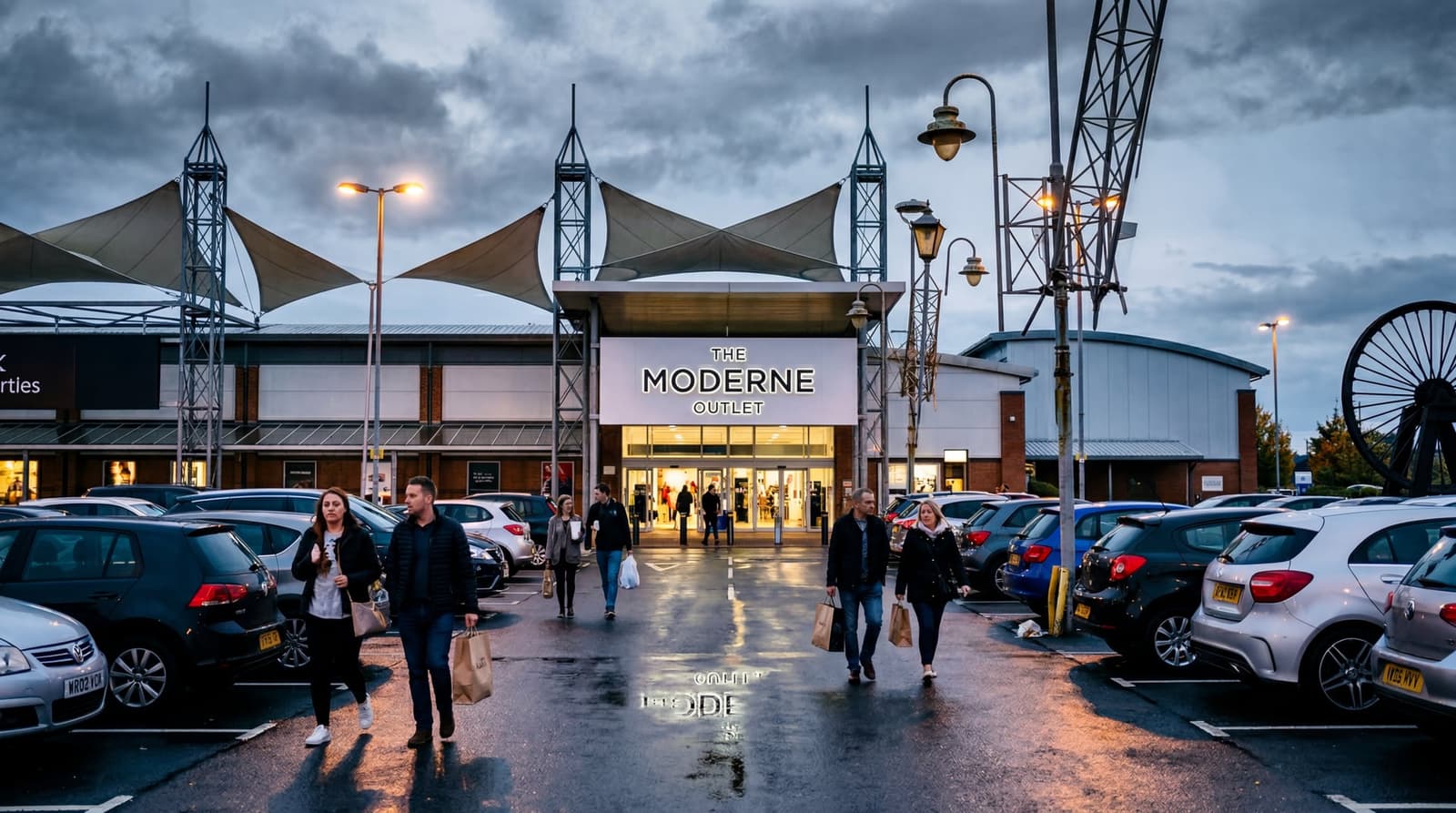
Frasers rebrands Castleford outlet 'Leeds'. The real story is a credit product.
Mike Ashley's retail group has slapped a city name and a buy-now-pay-later brand on a 26-year-old shopping centre built on a former Yorkshire colliery. Locals aren't impressed. The strategy underneath is bigger than the…
Keep Reading

Northern Ireland's rarest rainforest gets a 100-year reboot in Tyrone

Four Jersey beaches flunk bacteria tests as island bakes in record May heat

Bionic arms for five-year-olds, a third thumb, and the 90% who get nothing

Trump tells new Fed chair Warsh to be 'totally independent' after year-long Powell feud

Waymo Halts Robotaxis in 5 Cities as Flood Patch Fails in Atlanta