







UK pledges £120m for ceramics, but gas-price gap remains
Chancellor Rachel Reeves unveiled a rescue package for Stoke-on-Trent's battered potteries, yet structural questions over industrial gas pricing are unresolved and the money arrives too late for Denby.

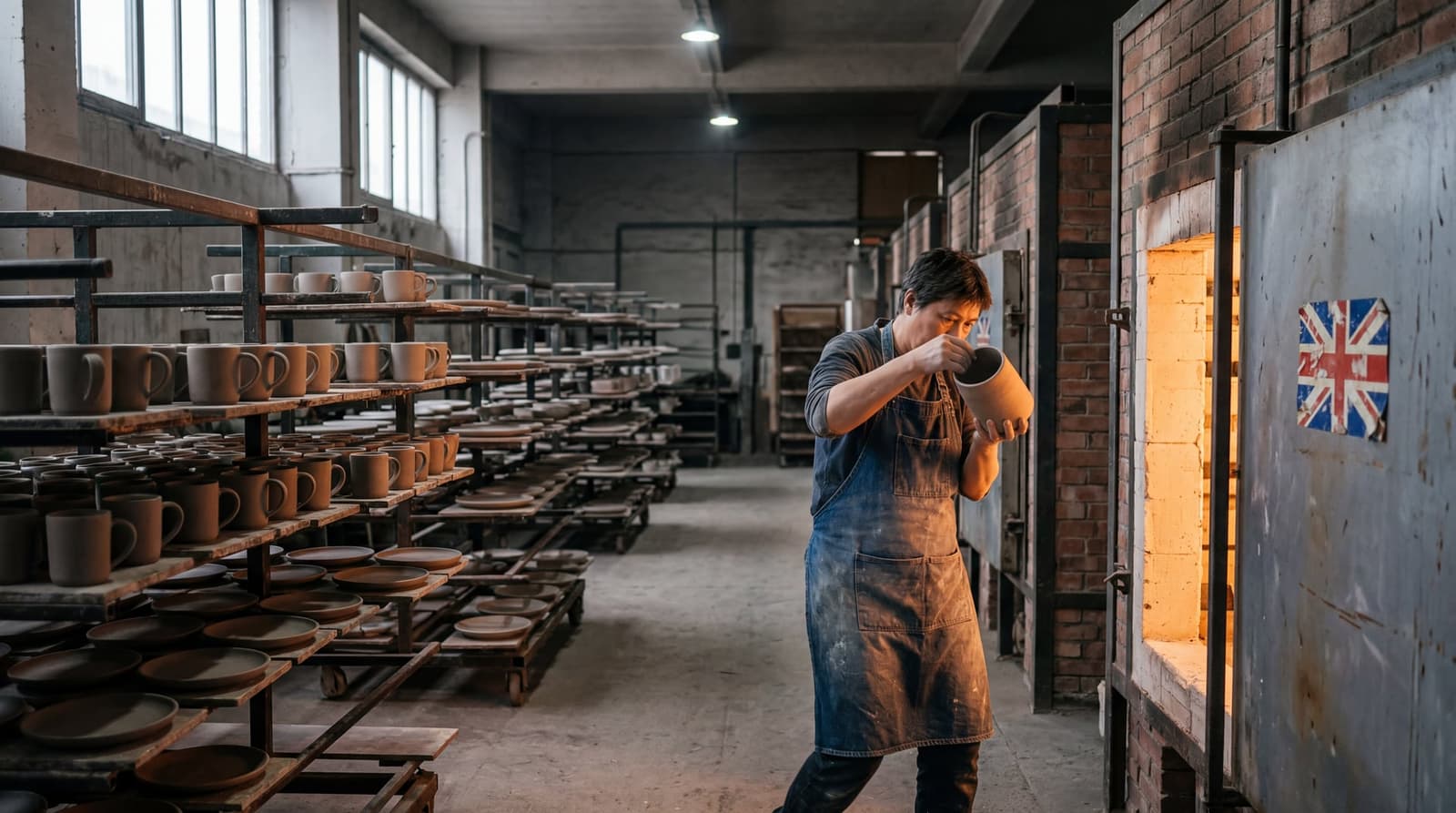
The UK government on 21 May 2026 committed £120 million to support the country's beleaguered ceramics industry, the most substantial sector-specific intervention since gas prices spiked after Russia's 2022 invasion of Ukraine. The funding is split evenly between £60 million in capital grants for energy efficiency and decarbonisation equipment and £60 million to ease operational costs, according to the BBC. Eligible manufacturers across refractory products, clay building materials, household ceramics and technical ceramics will be able to apply when the scheme opens later this summer.
The ceramics money sits inside a wider £470 million package that also includes a £350 million Critical Chemicals Resilience Fund, the Department for Business and Trade confirmed. Chancellor Rachel Reeves announced the funding alongside Business Secretary Peter Kyle.
"The chemicals and ceramics industries underpin our economic resilience and support skilled jobs across the UK," Reeves said. She added a pointed nod to the most prominent recent casualty: "We are backing UK ceramics. We want to find a future for Denby."
A turning point, with caveats
For the sector's lead trade body, the announcement closes out a frantic spring of lobbying that drew in MPs, the GMB union and a Denby Pottery public petition that surpassed 38,500 signatures. Ceramics UK chief executive Rob Flello called the decision "a turning point" and confirmed his organisation has been asked to work with civil servants on scheme design.
Flello told Yahoo Finance the package was "a fantastic recognition of the importance of the UK ceramics industry," and told Business Matters he couldn't "wait to get sleeves rolled up and work out how we're going to spend it."
Manufacturers were broadly positive but measured. Iain Martin, chief executive of Emma Bridgewater, who has said his business absorbed a £1.4 million loss against soaring input costs, called it "a very welcome support from the government, which I think the whole industry will be very pleased with."
The gas problem the money doesn't solve
The structural issue at the heart of the sector's distress is gas pricing, and £120 million does not fix it. Ceramic kilns must be held above 1,000°C for extended periods, and gas accounts for roughly 90% of the energy consumed in production. That makes previous interventions aimed at electricity bills largely beside the point.
The industry felt that mismatch sharply in April 2026, when the government's British Industrial Competitiveness Scheme, designed to cut electricity bills for 10,000 energy-intensive firms, excluded most ceramic manufacturers. The exclusion triggered the petition campaign and intensified pressure from Stoke-on-Trent Central MP Gareth Snell, who chairs the All-Party Parliamentary Group on Ceramics.
Listed homewares group Portmeirion, whose brands include Spode and Royal Worcester, signalled the scale of the underlying cost problem in a regulatory statement welcoming the package. The company's UK energy costs in FY25 totalled approximately £2.8 million, against a workforce of 660, including 433 in Stoke-on-Trent. Capital grants will help, but only firms that survive the next gas-price cycle will get to spend them.
Too late for some
The timing question hangs over the announcement. Royal Stafford has collapsed. Moorcroft survived only after a rescue by the founder's grandson in 2025. Denby Pottery entered administration earlier this year, citing rising energy and labour costs, and ceased manufacturing in April with the loss of more than 100 jobs.
Research commissioned by Stoke-on-Trent City Council and carried out by KADA and Ortus Economic Research found the number of ceramics firms in North Staffordshire fell from 137 in 2018 to 123 in 2024. Council leader Cllr Jane Ashworth, presenting the report alongside a cross-party call for action, said: "This report makes clear that ceramics isn't just part of our past, but our future, too."
The dual-track sector
That future is not only tableware. The same KADA/Ortus research found supply-chain turnover in advanced and technical ceramics, sanitaryware and refractory products grew 35% between 2018 and 2024, driven by demand from aerospace, defence, medical implants, clean energy and electronics.
That split matters for how the £120 million is spent. A scheme weighted toward capital decarbonisation grants could disproportionately benefit larger technical-ceramics manufacturers with the balance sheets to co-invest, while the operational-cost tranche is likely to be more decisive for smaller heritage tableware firms running on thin margins. Ceramics UK's role in scheme design will shape that balance.
In the chemicals sector, which received the larger slice of the £470 million envelope, Chemical Industries Association chief executive Steve Elliott called the package "a very welcome first step," language that echoed the cautious tone from ceramics manufacturers. Applications open later this summer. The harder conversation, about how the UK prices industrial gas relative to European competitors, has only been deferred.
Related stories
Six eggs used to cost £1. Here's why they're now £2.
UK egg prices have doubled in four years despite record production. The real story isn't greedflation, it's how prices move down much slower than they move up.
In Cambridge, a paycheck no longer keeps workers out of the food bank
The UK's most unequal city is now feeding employed residents through subsidised food clubs, raising questions about whether wages or housing will ever catch up.
UK spends £25 on youth benefits for every £1 on jobs help, Milburn finds
The former Labour health secretary's interim NEET review lands on a government still bruised by last summer's welfare rebellion, and questions whether spending more on job schemes can fix a crisis now driven by mental…

Why your ice cream costs $6.49: a coconut, cocoa and corporate crisis
A record-hot summer pushed American ice cream prices to all-time highs. The deeper story runs through Philippine biodiesel mandates, West African droughts, and the breakup of the world's biggest ice cream company.
Keep Reading
Juliann Bluitt Foster, Trailblazer in Dentistry, Is Dead at 80

Northern Ireland's rarest rainforest gets a 100-year reboot in Tyrone

Four Jersey beaches flunk bacteria tests as island bakes in record May heat

Bionic arms for five-year-olds, a third thumb, and the 90% who get nothing

Frasers rebrands Castleford outlet 'Leeds'. The real story is a credit product.