

UK signs £3.7bn Gulf trade deal, drops the rights clause Labour once demanded
Britain becomes the first G7 nation to strike a free trade agreement with the six-state GCC bloc, but the pact lands without the human rights protections Labour championed in opposition.

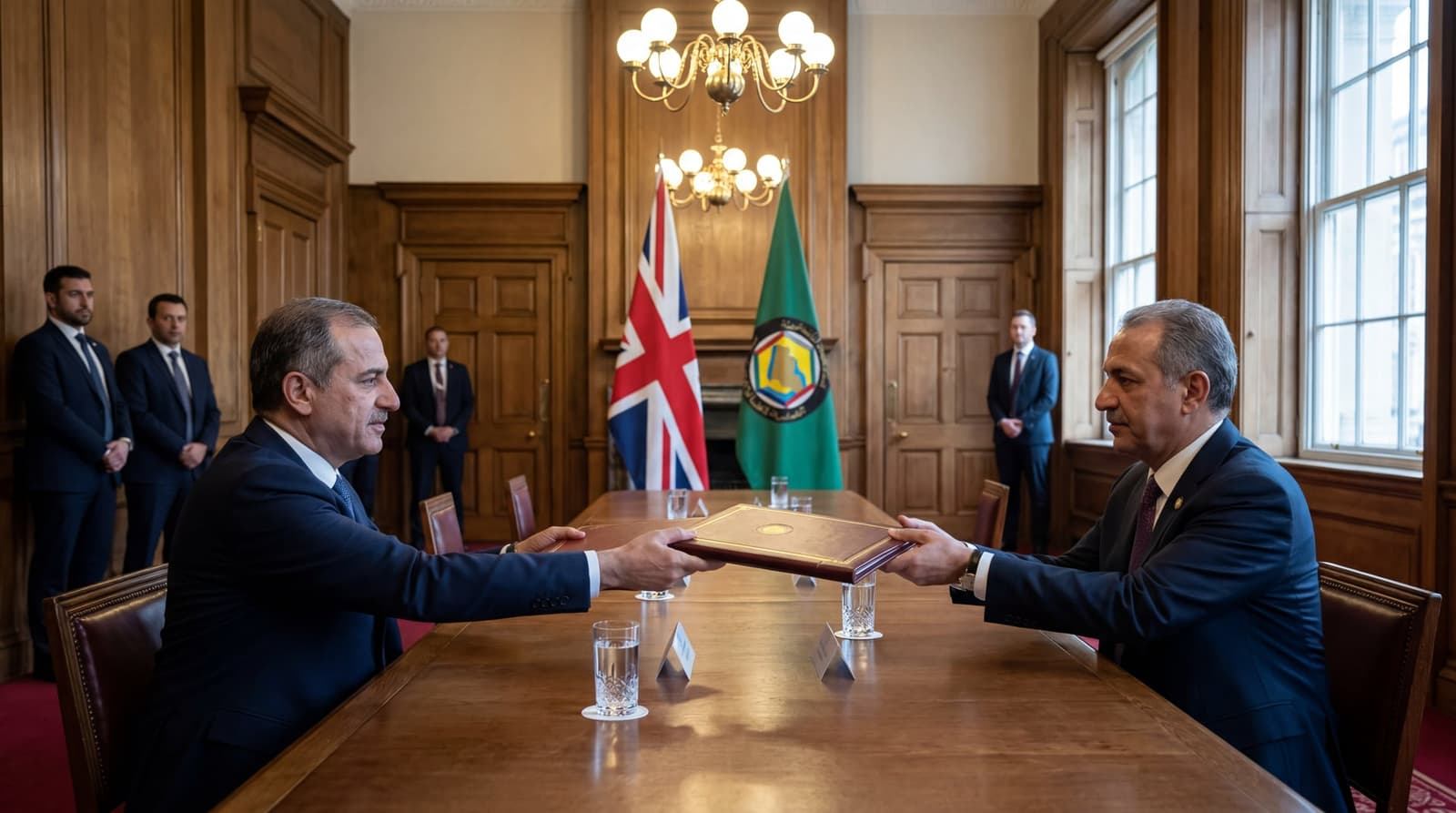
The United Kingdom signed a free trade agreement with the Gulf Cooperation Council on 20 May, becoming the first G7 country to secure such a deal with the six-state bloc and projecting a £3.7 billion ($4.9bn) annual boost to GDP measured against 2040 forecasts.
The agreement, signed in London by UK trade policy minister Sir Chris Bryant and GCC Secretary General Jasem Mohamed Albudaiwi, covers Bahrain, Kuwait, Oman, Qatar, Saudi Arabia and the United Arab Emirates. It eliminates an estimated £580 million in tariffs on current UK exports once fully implemented, with £360 million removed on day one, according to the UK Department for Business and Trade. Roughly 93% of GCC duties on British goods will be cut, the department said.
Prime Minister Sir Keir Starmer called the pact "a huge win for British business, and for working people who will feel the benefits in the years ahead through higher wages and more opportunities," in remarks reported by CNBC. It is Starmer's fifth major trade agreement after deals with India, the United States, the European Union and South Korea.
The headline numbers more than double the £1.6 billion uplift modelled when negotiations began in 2022 under Boris Johnson's Conservative government. Current bilateral trade stands at around £53 billion, and ministers project the deal will lift that by about 20%.
The clause Labour once demanded, then dropped
In June 2022, the Labour Party in opposition publicly attacked the Conservatives for stripping human rights and rule-of-law provisions from the GCC negotiating mandate. Labour's then shadow trade secretary called such principles "fundamental to what we stand for as a country."
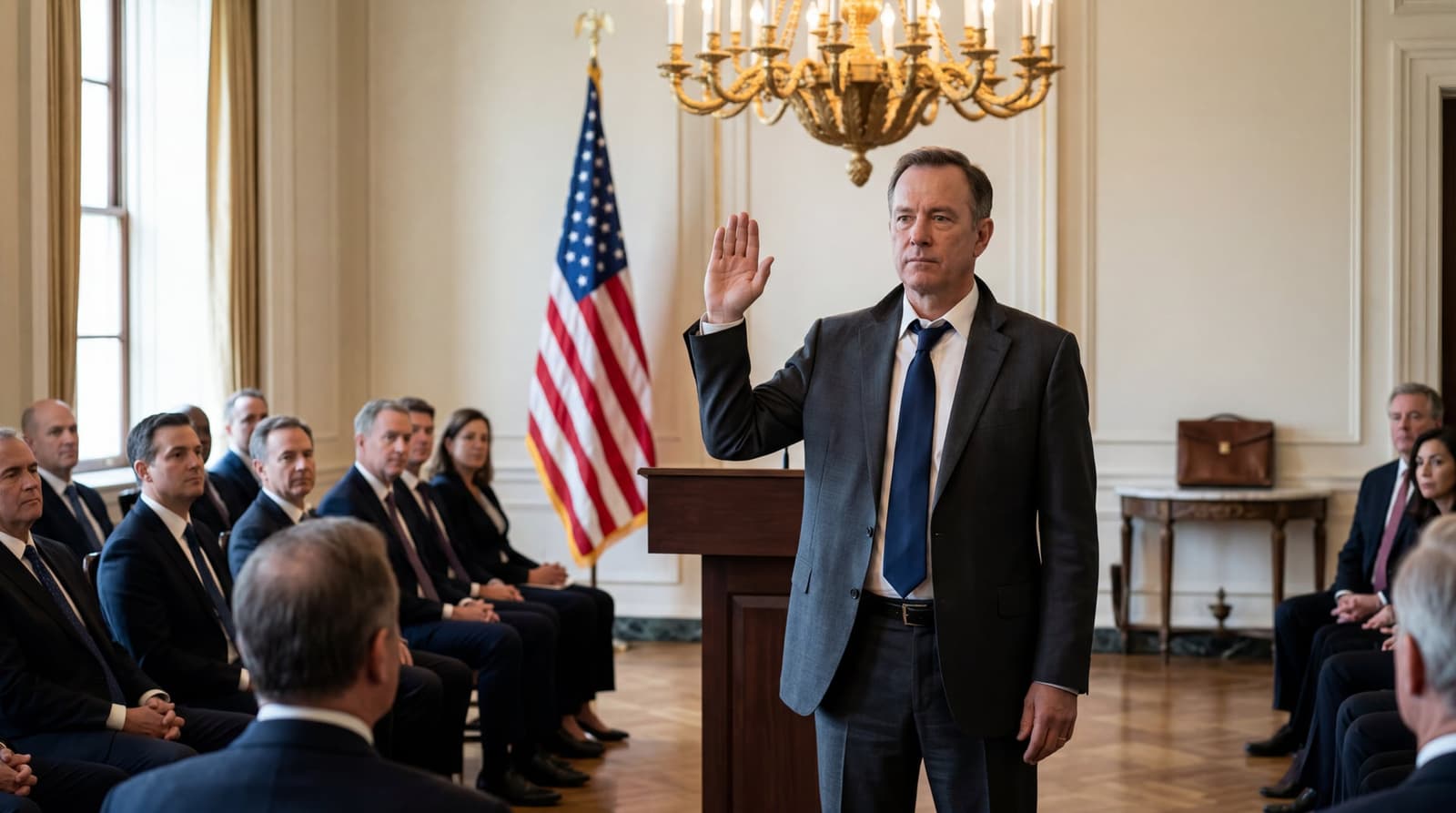
Four years later, in government, Labour concluded the deal without a specific human rights clause. The reversal has drawn sharp criticism from a coalition that had spent months pressing ministers for enforceable protections on labour rights, press freedom, the death penalty and climate.
Five of the six GCC nations are rated by the ITUC Global Rights Index in its worst category, "no guarantee of rights." In September 2025, 14 organisations including Human Rights Watch, the Trade Justice Movement and the TUC wrote to Starmer asking for enforceable rights conditions before any signing. That demand was not met.
"Signing a trade deal with the Gulf Cooperation Council without enforceable human rights protections would be a political failure and a moral outrage," Tom Wills, director of the Trade Justice Movement, said in a statement issued before the deal was finalised (TJM).
Joey Shea of Human Rights Watch warned in the same coalition statement that "without strong rights protections in the forthcoming Gulf trade pact, the UK risks further contributing to pervasive abuses against migrant workers," citing the region's kafala sponsorship system.
Government supporters counter that trade policy is the wrong tool for the job. "Trade is not the right vehicle to tackle human rights," Chris Southworth of ICC UK told reporters, according to coverage aggregated by Yahoo Finance.
What's in the deal
The agreement targets food and drink, advanced manufacturing, autos, aerospace, electronics and medical equipment. The GCC imports roughly 85% of its food, and British exporters of cereals, cheddar, chocolate, butter and Scottish smoked salmon will see Gulf tariffs disappear, according to trade publication just-food. Pork, chicken and eggs are explicitly excluded from UK-side tariff liberalisation.
The pact also contains what the Department for Business and Trade describes as "first-of-its-kind" GCC commitments on the free flow of data, removing data-localisation requirements for UK firms operating in the region.
Business and Trade Secretary Peter Kyle framed the timing as deliberate. "At a time of increased instability, today's announcement sends a clear signal of confidence, giving UK exporters the certainty they need to plan ahead," he said. Chancellor Rachel Reeves called the deal "good for jobs, good for industry and ultimately good for consumers."
The Iran caveat ministers aren't mentioning
The export story ministers are selling carries a footnote most coverage has glossed over. Karen Betts, chief executive of the Food and Drink Federation, welcomed the deal but acknowledged regional conflict is already eating into the gains.
Prior to the war in Iran, our exports to the region were worth over £800m a year and growing at twice the rate of EU exports.
Karen Betts, CEO, Food and Drink Federation
In other words, the baseline ministers are projecting growth from has already been disrupted by the conflict the deal is partly framed as insulating against.
Public opinion, and the small print
Polling commissioned by the Trade Justice Movement and conducted by Yonder found that only 21% of the UK public supports a trade agreement with the GCC, and 68% believe the UK should not sign trade deals with countries with poor human rights records.
Critics have also flagged investor-protection provisions in the text that they say could constrain future UK policymaking on climate, labour or public health, an issue that received almost no airtime in the government's launch materials.
For now, ministers are leaning on the topline economics. The £1.9 billion real-wages projection, the 93% tariff cut and the data-flow chapter will form the spine of the government's case as ratification proceeds. Whether the reversal on rights clauses becomes a recurring political problem, or fades into the back pages, will depend less on the text of the deal than on what happens next in the Gulf.
Related stories
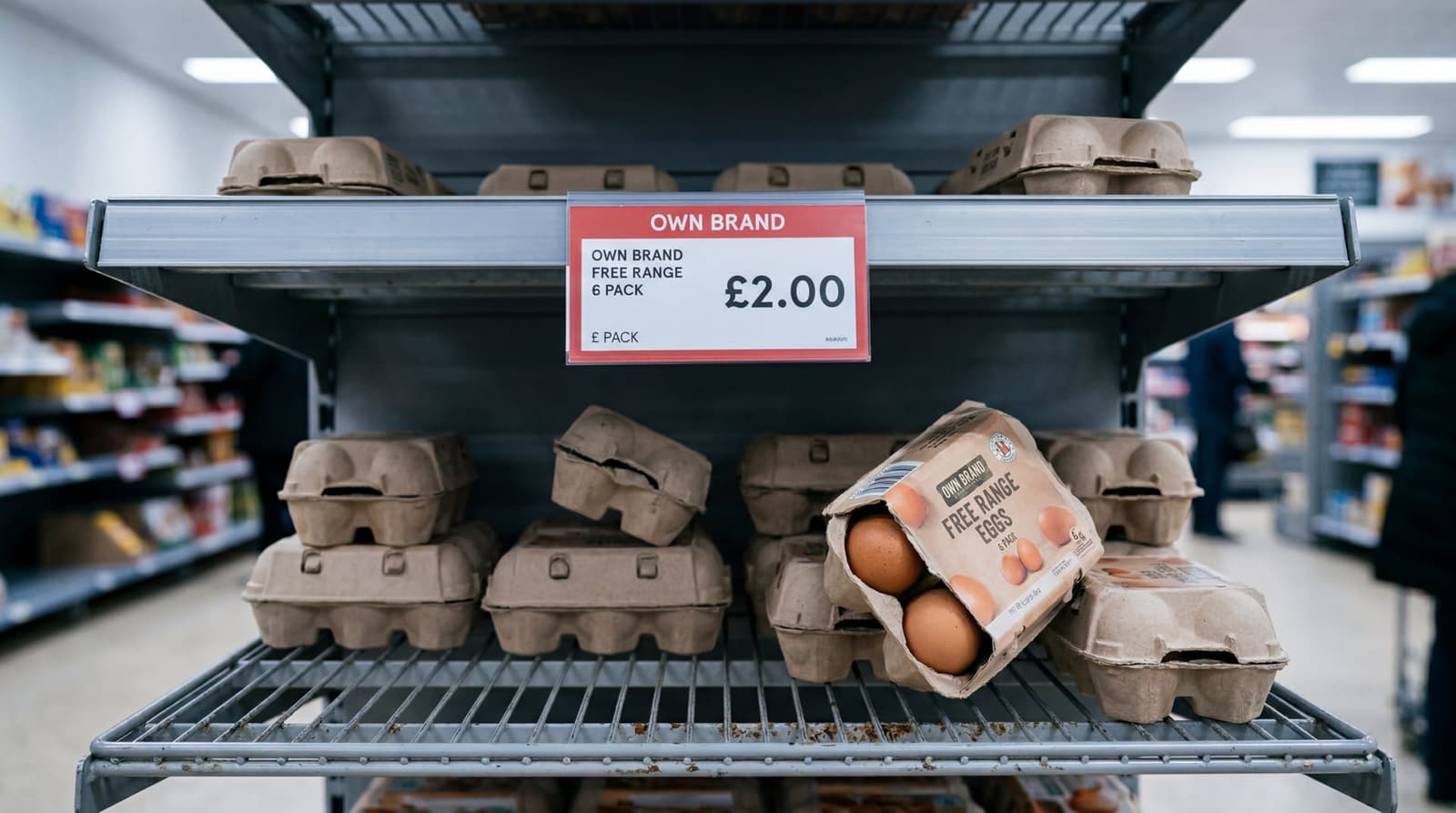
Six eggs used to cost £1. Here's why they're now £2.
UK egg prices have doubled in four years despite record production. The real story isn't greedflation, it's how prices move down much slower than they move up.
In Cambridge, a paycheck no longer keeps workers out of the food bank
The UK's most unequal city is now feeding employed residents through subsidised food clubs, raising questions about whether wages or housing will ever catch up.
UK spends £25 on youth benefits for every £1 on jobs help, Milburn finds
The former Labour health secretary's interim NEET review lands on a government still bruised by last summer's welfare rebellion, and questions whether spending more on job schemes can fix a crisis now driven by mental…
Why your ice cream costs $6.49: a coconut, cocoa and corporate crisis
A record-hot summer pushed American ice cream prices to all-time highs. The deeper story runs through Philippine biodiesel mandates, West African droughts, and the breakup of the world's biggest ice cream company.
Keep Reading
Juliann Bluitt Foster, Trailblazer in Dentistry, Is Dead at 80

Northern Ireland's rarest rainforest gets a 100-year reboot in Tyrone
Four Jersey beaches flunk bacteria tests as island bakes in record May heat
Bionic arms for five-year-olds, a third thumb, and the 90% who get nothing
Frasers rebrands Castleford outlet 'Leeds'. The real story is a credit product.